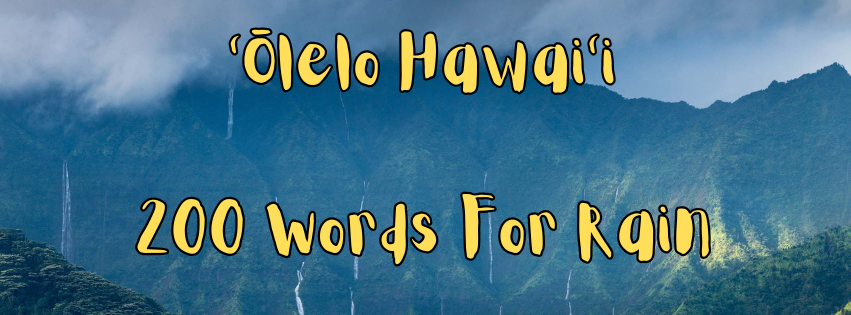
There Are Over 200 Words For "Rain" in Hawaii!
Like the islands themselves, ʻŌlelo Hawaiʻi is alive—deeply rooted in place, shaped by nature, and constantly evolving alongside the land.
Nowhere is that connection more vivid than in the way rain is understood and described. In Hawaiian culture, rain is not just weather. It is identity, timing, memory, and meaning all at once.
There are more than 200 distinct names for rain across the islands. That alone says something powerful. Each term carries its own nuance, its own personality, and often its own story tied to a specific location.
It reflects a way of observing the world that is detailed, intentional, and deeply connected to the environment.

More Than Just Rain
In many places, rain is described in simple terms—light, heavy, scattered, or steady. In Hawaiʻi, those broad descriptions barely scratch the surface. Rain is categorized by how it falls, when it arrives, where it appears, and even what it signals.
Take kili noe, a soft, fine rain that gently settles across the landscape. It might seem similar to kili ʻohu, but that distinction matters—kili ʻohu is even finer, almost mist-like. These differences aren’t just poetic; they reflect careful observation over generations.
On Oʻahu, a rain that circles a home is known as pōʻaihale, describing not just the rain itself but the way it interacts with a specific place. On Niʻihau, kulu pākakahi refers to a rain that arrives in November, tied to seasonal patterns unique to that island.
Nothing about these names is random. Each one exists because it served a purpose.
Rain as a Guide to Life
For Native Hawaiians, rain was more than something to notice—it was something to rely on. Many rain names were directly connected to survival, agriculture, and fishing.
Hukiheʻenehu, for example, is a misty rain associated with Hilo. When it appeared, it signaled that nehu fish were running along the coast. That rain wasn’t just atmospheric—it was a message. It told fishermen it was time to act.
Other rains marked agricultural cycles. Hoʻopala ʻōhiʻa indicated when the ʻōhiʻa fruit was ripening, while Hoʻopuluhīnano pointed to the growth of hīnano in certain areas of Kauaʻi.
Even kuāua, a gentle rain without wind, played a role. Farmers growing ʻuala (Hawaiian sweet potato) would watch for it to help determine planting times.
This level of awareness shows how closely daily life was tied to natural patterns. Rain wasn’t separate from life—it guided it.

Emotional and Spiritual Meaning
Rain also carries emotional weight in Hawaiian culture. It is not just physical, but deeply spiritual.
Apo pue kahi is a name given to a rain that is felt after the passing of a loved one. It’s a reminder that nature and human experience are not seen as separate. Instead, they are intertwined, reflecting a worldview where the environment responds to and mirrors human life.
This perspective adds another layer to the language. Rain becomes a form of expression—something that can represent grief, memory, or connection.
A Language Rooted in Observation
The depth of this vocabulary comes from generations of close observation. Hawaiian ancestors, or kūpuna, paid attention to the smallest details in their surroundings. Over time, those observations became language.
Collette Leimomi Akana, author of Hānau Ka Ua – Hawaiian Rain Names, describes this connection clearly. The names for rain and wind weren’t created casually—they were born from daily interaction with the environment.
Her work gathers these names from oral traditions, chants, stories, and written records, preserving a part of Hawaiian knowledge that might otherwise fade over time. Alongside her, co-researcher Kiele Gonzalez continues that effort, helping bring these terms back into awareness.
A Landscape Like No Other
Part of what makes this system so rich is Hawaiʻi’s unique geography. The islands experience some of the steepest rainfall gradients in the world. In certain areas, rainfall can increase by as much as 25 inches per mile.
That means conditions can change dramatically over very short distances. It’s entirely possible to stand in sunshine while rain falls just a few steps away. This constant variation naturally led to a more detailed way of describing weather.
Even in everyday English, people in Hawaiʻi tend to describe rain more specifically—mist, drizzle, showers, passing rain. But compared to Hawaiian, those descriptions are still limited.

Reconnecting Through Language
Today, many of these rain names are not commonly used in daily conversation. But efforts to preserve and reintroduce them are growing. There’s a recognition that language is more than communication—it’s a way of understanding the world.
Learning these names is also a way of reconnecting with place. In Hawaiian culture, ʻāina (land) is closely tied to identity. Knowing the rains of a region means knowing something about its character—and, in a way, about oneself.
There’s even hope that one day, local weather reports might begin using traditional rain names again, bringing them back into everyday awareness.
Looking Ahead: The Language of Wind
Rain is only part of the story. Because wind plays such a major role in shaping weather, researchers are now turning their attention to it as well.
A companion project, Hānau ka Makani – Hawaiian Wind Names, is already in development. So far, more than 600 names for winds have been documented—each one carrying the same level of detail and cultural significance as the rain names.
A Deeper Way of Seeing
The Hawaiian language offers a different way of looking at something as simple as rain. It transforms it from a basic weather event into something layered, meaningful, and deeply connected to life.
It’s a reminder that language shapes perception. Where one person sees rain, another might see timing, memory, or even guidance.
And in that difference, there’s something worth paying attention to. While you're here, feel free to check out what we have in store today on Aloha Sun!