The Mystery of Hawaii’s Vanishing Islands
Hawaii is known for its breathtaking landscapes, volcanic origins, and deep cultural history—but there’s another layer to the islands that feels almost surreal.
For generations, there have been stories of islands that appear and disappear without warning, often at sunrise or sunset, hovering just beyond the edge of certainty.
These aren’t just modern myths or internet folklore.
Over a century ago, Hawaiian-language newspapers documented eyewitness accounts of these strange sightings, preserving them in written form long before theories like mirages or atmospheric distortions became widely understood.
With more than 100 Hawaiian-language publications dating back to the 1800s, these records offer a fascinating glimpse into how people experienced and tried to explain the unknown.

Kanehunamoku: The “Hidden Land of Kane”
One of the most well-known of these mysterious islands is Kanehunamoku, often translated as the “hidden land of Kane.” In Hawaiian tradition, Kane is a major deity associated with creation and life, which adds a spiritual weight to the stories surrounding this elusive island.
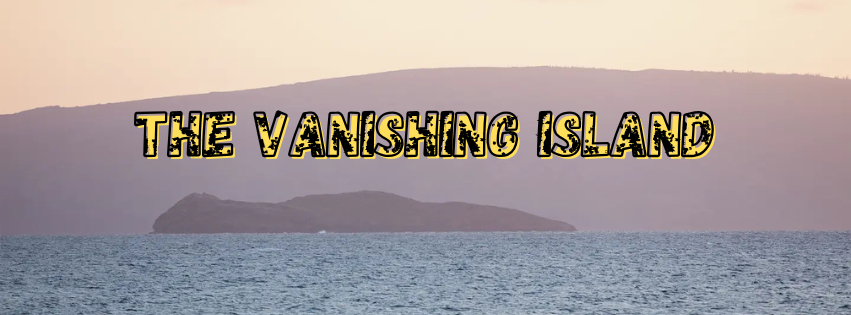
In a newspaper article published on December 1, 1900, in Ke Aloha Aina, a man named Moses Kaulahea described seeing this island appear between Maui and Kahoolawe in the early morning light. According to his account, the island looked real—detailed enough to see features on its surface—before slowly fading away as the sun rose.
He wrote that it appeared as if multiple islands were sitting together in perfect alignment: Maui, Kanehunamoku, Kahoolawe, and Lanai. But by 6:20 a.m., the island had vanished completely, leaving the ocean empty once again.
Stories like this weren’t isolated. Similar sightings were reported across different islands, often describing the same pattern—an island appearing briefly, then dissolving into nothing.
Ancient Stories and Cultural Meaning
The idea of hidden or disappearing islands isn’t new in Hawaiian culture. In fact, it dates back centuries and appears in ancient chants and oral traditions, including the Kumulipo, one of Hawaii’s most important creation stories.
According to these traditions, Kanehunamoku is sometimes described as one of a group of sacred islands connected to the gods. These islands were believed to exist beyond the physical world, appearing or disappearing based on divine will.
In her book Hawaiian Mythology, Martha Beckwith described these as “lost islands” or “islands hidden by the gods.” She noted that they might be seen on the horizon at sunrise or sunset, often glowing with a reddish light, and could shift between being above the water, below it, or even floating in the air.
Some accounts go even further, describing sounds and movement—roosters crowing, vegetation swaying, and figures walking across the land. These details blur the line between myth and lived experience, making the stories feel vivid and strangely tangible.
Eyewitness Accounts That Feel Almost Modern
Not all reports read like ancient folklore. Some feel surprisingly similar to modern-day paranormal or unexplained sightings.
In a 1912 article from Ka Nupepa Kuokoa, a couple fishing near the Kohala coast on Hawaii Island described the ocean behaving strangely, as if it were boiling. Later that night, they saw a line of lights moving across the water toward them.
Then, something even stranger happened.
The lights disappeared, and in their place stood what looked like a dark landmass just offshore. They claimed to see shapes resembling trees and even movement across the surface, though they couldn’t hear any voices. By morning, it was gone.
The account ends with a question that still lingers: Was this Kanehunamoku, or something else entirely?
Science Steps In: Mirage or Mystery?
While these stories are fascinating, not everyone believed they were supernatural. Even in the 1800s, some writers attempted to explain the phenomenon scientifically.
One theory points to optical illusions known as mirages—specifically a rare type called a Fata Morgana. This kind of mirage can bend light in unusual ways, making distant objects appear distorted, elevated, or even floating above the horizon.
Under the right atmospheric conditions, islands, ships, or landforms far away can seem much closer—or appear entirely where they shouldn’t be. To someone witnessing it without that context, it could easily look like a new island materializing out of nowhere.
There’s also the possibility that some stories were influenced by real geological changes. Over long periods, islands can erode, sink, or shift due to volcanic and oceanic activity. Some researchers suggest that ancient Hawaiians may have observed these changes and incorporated them into their stories.
A Story That Refuses to Disappear
Whether explained by science, rooted in mythology, or somewhere in between, the story of Kanehunamoku continues to capture attention.
What makes it so compelling isn’t just the mystery—it’s the way it blends cultural belief, historical documentation, and real human experience. These accounts weren’t written as fiction. They were recorded by people trying to make sense of something they truly believed they had seen.
Even today, the idea of hidden islands appearing on the horizon feels oddly possible when standing on a Hawaiian shoreline at sunrise or sunset, watching the light shift across the ocean.
Some things don’t need a definitive answer to remain meaningful. Kanehunamoku exists not just as a place—real or imagined—but as part of Hawaii’s cultural memory, where the boundary between the physical and the spiritual has always been a little more fluid.