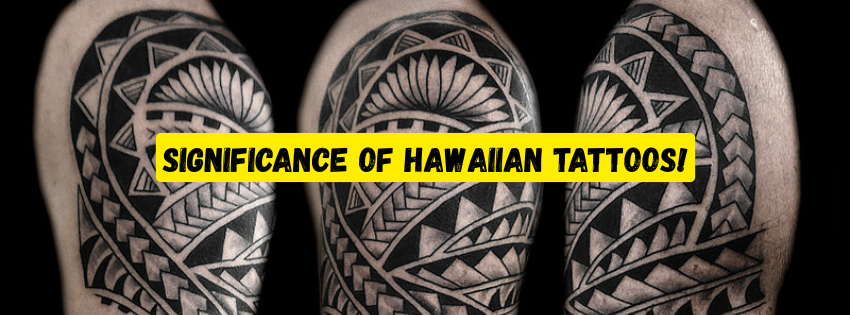
The Deeper Meaning of Hawaiian Tattoos: Culture, Kuleana, and Craft
Across Polynesia, tattooing has always been more than decoration. It functions as identity, memory, and responsibility woven directly into the skin.
In Hawaiʻi, this tradition is known as kākau, and it carries a depth that extends far beyond visual design.
Each mark represents lineage, personal duty (kuleana), and a connection to ancestors who shaped the wearer’s place in the world. Even in modern times, when tattooing has become globally mainstream, Hawaiian tattoo culture continues to emphasize meaning over aesthetics.
At its core, kākau is not about choosing a design from a catalog. It is about telling a story that belongs to a person, a family, or a community.
The symbols used in Hawaiian tattooing often reflect natural elements like waves, plants, and ocean life, but their meaning is rarely literal. Instead, they act as coded language, carrying layered significance that can speak to protection, identity, or spiritual grounding.

Kākau and the Foundation of Identity
The word kākau translates closely to “to strike” or “to place upon,” referencing the traditional method of tattooing in Hawaiʻi. Historically, tattoos were applied using hand-tapping tools made from bone, wood, and natural ink sources.
The process itself was considered sacred, often accompanied by chanting and ritual. It was not a casual act but a transition—sometimes marking adulthood, responsibility, or achievement within a family or community structure.
In traditional Hawaiian society, tattoos functioned almost like a visual record of who someone was. They could indicate lineage, island origin, or role within society. Certain placements were reserved for higher-status individuals, while others were associated with warriors or specific community responsibilities.
Facial tattoos, in particular, were often associated with authority and prestige, reinforcing the idea that identity was not only spoken but visibly carried.
Unlike modern trends where tattoos can be impulsive or purely aesthetic, kākau historically required intention, approval, and cultural understanding. The permanence of the ink reflected the permanence of responsibility behind it.
Polynesian Roots and Shared Cultural Threads
Hawaiian tattooing does not exist in isolation. It belongs to a wider Polynesian system of tattoo traditions that stretches across the Pacific. Similar practices can be found in Samoa, Tonga, and Aotearoa (New Zealand), where tattoos such as tatau and moko serve parallel functions of identity and status.
While each culture developed its own visual language and style, the underlying philosophy remains shared. Tattoos are earned rather than casually chosen. They mark transitions in life, such as adulthood, leadership, or the acceptance of responsibility within the community. This shared cultural framework reinforces tattooing as a rite of passage rather than a fashion statement.
Even today, contemporary Polynesian artists continue to draw from these ancestral connections, adapting traditional forms into modern contexts while preserving their original meaning. The result is a living tradition that evolves without losing its foundation.
The Role of the Tattoo Artist as Cultural Keeper
In Hawaiian tradition, the tattoo artist is not simply a technician. The role carries cultural and spiritual weight. A practitioner must understand symbolism, history, and the responsibility behind each design.
This includes knowing which patterns are appropriate for specific individuals and which designs may be considered sacred or restricted.
Traditional tattooing methods, particularly hand-tapping techniques, require precision and patience. Tools crafted from bone or other natural materials are used to insert ink into the skin through rhythmic tapping. This method, known as kākau uhi, transforms the tattooing process into a ceremonial act rather than a mechanical one.
Even in modern practice, where machine tattooing is common, many artists continue to emphasize cultural respect and storytelling. The goal is not simply to create a visually appealing design, but to ensure the wearer understands and honors its meaning. In this way, the tattoo artist acts as both creator and custodian of cultural knowledge.

Traditional Tools and the Ritual of Creation
Historically, Hawaiian tattoo tools were made from natural materials such as bird bone, turtle shell, or wood. These implements were attached to handles and used alongside ink derived from natural sources like candlenut soot. The process required steady rhythm and often took hours or even days depending on the complexity of the design.
The experience of receiving a tattoo was deeply immersive. It was not uncommon for chanting or ceremonial elements to accompany the process, reinforcing the spiritual nature of the act.
Healing afterward was a significant part of the journey, emphasizing that the tattoo was not complete when the ink was applied, but when it became fully integrated into the wearer’s life.
Modern adaptations have introduced faster and more precise tools, but many practitioners still preserve traditional methods, especially when working with culturally significant designs. The continuation of these practices ensures that kākau remains connected to its origins rather than becoming purely decorative.
Meaning, Responsibility, and Cultural Respect
One of the most important concepts in Hawaiian tattoo culture is kuleana, or responsibility. A tattoo is not only an expression of identity but also a commitment to the meaning it carries. This includes respect for the culture from which it originates.
Some Hawaiian designs are considered kapu, meaning they are sacred or restricted to certain families or lineages. This makes cultural understanding essential before choosing a design inspired by Hawaiian tradition. Many contemporary artists encourage open dialogue, helping individuals create tattoos that reflect personal stories while respecting cultural boundaries.
This emphasis on respect is especially important as Hawaiian tattoo imagery becomes more widely popular around the world. Without proper understanding, meaningful symbols risk being reduced to aesthetic trends, losing their cultural depth in the process.

A Living Tradition That Continues to Evolve
Despite modernization, Hawaiian tattooing remains a living tradition. Artists and cultural practitioners continue to preserve ancestral techniques while adapting to contemporary contexts. Institutions like the Bishop Museum help document and share the history of kākau, ensuring that its stories remain accessible.
At the same time, individuals who receive Hawaiian-inspired tattoos often describe the experience as deeply personal and reflective.
When done with care and understanding, the process becomes less about appearance and more about connection—to ancestry, identity, or personal growth.
Hawaiian tattoos ultimately represent a form of storytelling that exists on the body rather than on paper. They carry meaning that can deepen over time, reflecting the evolving relationship between the wearer and the symbols they carry.
Even as styles change and techniques modernize, the foundation remains consistent: kākau is about identity, responsibility, and the living memory of culture passed through generations.