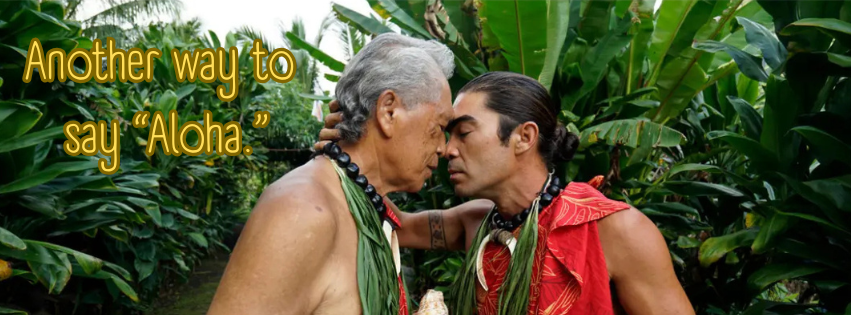
Honi Ihu: Another Way to Say "Aloha"
Honi ihu is one of the most intimate and meaningful traditional greetings in Hawaii, rooted deeply in spirituality, ancestry, and human connection.
Unlike a handshake or a casual embrace, this practice involves touching nose to nose, often forehead to forehead, and sharing breath. It is not simply a greeting—it is a symbolic exchange of life force, known in Hawaiian culture as ha, or the breath of life.
The words themselves reflect this meaning. Honi can be translated as to kiss, smell, or touch, while ihu means nose. Together, they describe a gesture that is both physical and spiritual, representing connection on a level that goes far beyond surface interaction.
The Deeper Spiritual Meaning of Honi
At the heart of honi ihu is the belief that breath is sacred. The ha is considered divine, something that originates from a higher spiritual source and lives within every person. When two individuals share breath through honi, they are exchanging a piece of that divine essence.
This act transforms a simple greeting into something profound. It becomes a recognition of another person’s spirit, presence, and lineage. It is a moment where two individuals meet not just physically, but energetically and spiritually.
Honi ihu is often reserved for those who are honored, loved, or deeply respected. To receive a honi is considered a sign of esteem, signaling that the connection being formed is meaningful and sincere.

The Physical Practice of Honi
The practice of honi ihu involves more than just touching noses. Traditionally, individuals also bring their foreheads together, creating what is described as alo to alo, or bone to bone contact. This connection includes the makaloa, often referred to as the third eye, which is considered the intuitive center of the body.
By touching forehead to forehead, there is a belief that one can sense or understand another person’s intention. It creates a moment of stillness where awareness is heightened and communication extends beyond words.
Hawaiian belief holds that ancestral DNA is carried within the bones. When two people connect bone to bone, they are symbolically linking their lineages. It becomes a recognition of ancestry, identity, and shared humanity.
The final and most significant step is the exchange of breath. This is where the spiritual meaning of honi truly comes to life. Sharing the ha represents the exchange of divine energy—the breath that is believed to come directly from Spirit.
Similar Traditions Around the World
Honi ihu is not the only cultural practice centered around the sharing of breath. Similar greetings can be found in other parts of the world, each carrying its own meaning while reflecting a shared human desire for connection.
Among the Māori people of New Zealand, the traditional greeting known as Hongi involves pressing forehead to forehead and nose to nose. Like honi, it symbolizes the exchange of breath and life force, creating a bond between individuals.
In Inuit traditions, often associated with Arctic regions, a form of greeting involves rubbing noses, typically between close family members such as an elder and a child. This gesture carries a deeply intimate and familial energy, emphasizing warmth, closeness, and affection.
While these practices come from different cultures, they share a common thread. Each one values presence, connection, and the recognition of another person’s life force in a way that goes beyond verbal communication.

Historical Shifts and Cultural Impact
The arrival of Western explorers brought significant changes to Hawaiian traditions, including the way people greeted one another.
When foreigners introduced the handshake, it was seen as unusual and lacking meaning. Unlike honi, the handshake involved no exchange of breath and no spiritual connection.
This contrast may have influenced the Hawaiian term haole, often interpreted as foreigner. One perspective suggests the word reflects the idea of without breath, referring to those who did not participate in the exchange of ha. Another interpretation connects the term to physical appearance, as pale skin was sometimes associated with illness or a lack of life force.
Regardless of its exact origin, the shift from honi to handshakes symbolized a broader cultural change. Many traditional practices were suppressed during periods of colonization and missionary influence, leading to a decline in their everyday use.
The Modern Return of Honi
Today, honi ihu is experiencing a cultural revival. As Hawaiian communities continue to reconnect with their heritage, traditional practices are being embraced once again. Honi is increasingly seen in ceremonies, cultural events, and meaningful personal interactions.
However, its use in modern settings can sometimes feel uncertain. Because honi is such an intimate gesture, there can be hesitation about whether it is appropriate or welcomed. This reflects a broader historical context, where generations of Hawaiians experienced periods of cultural suppression and adaptation.
Despite this, there is a growing sense of pride in reclaiming these traditions. Honi ihu stands as a powerful reminder of identity, resilience, and the importance of maintaining cultural practices.
A Living Expression of Connection
Honi ihu represents more than a greeting. It is a reflection of values that prioritize respect, presence, and deep human connection. It bridges the physical and spiritual, linking individuals through breath, ancestry, and shared energy.
In a world where many interactions are brief and impersonal, honi offers something different. It slows the moment down and creates space for genuine acknowledgment. It is a reminder that connection is not just about words, but about presence, intention, and the unseen bonds that unite people.
As Hawaiian culture continues to be celebrated and preserved, honi ihu remains a powerful symbol of what it means to truly connect.