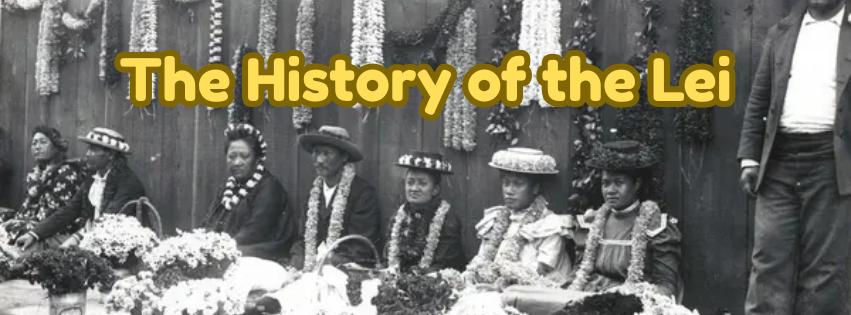
The History of the Hawaiian Lei and What It Really Means
Few things are as closely associated with Hawaii as the colorful lei. You might see one waiting for a visitor at an airport, wrapped around someone's shoulders at a celebration, or carefully presented during an important ceremony. Today, leis are often seen as a warm symbol of Hawaii and aloha, but the tradition behind them goes back centuries.
The Hawaiian lei is much more than a pretty necklace of flowers. Traditionally made from flowers, leaves, shells, seeds, feathers, and other natural materials, leis have played important spiritual, social, and ceremonial roles throughout Hawaiian history.
Where Did the Hawaiian Lei Come From?
The tradition of making and wearing leis is generally traced back to the early Polynesian voyagers who traveled to the Hawaiian Islands from Tahiti and other parts of Polynesia. These voyages took place over many centuries, with Polynesian settlement of Hawaii occurring long before European contact.
The voyagers brought plants, customs, beliefs, and traditions with them, and the lei became part of Hawaiian culture. Over time, Hawaiians developed their own styles and meanings for different materials.
That evolution is important because there isn't just one type of Hawaiian lei. Different flowers, leaves, feathers, shells, and seeds could carry different cultural meanings.

Leis Once Had Deep Spiritual Significance
In ancient Hawaii, leis weren't simply decorative accessories. They could have a sacred purpose.
Leis were used in religious ceremonies and as offerings to the gods. Certain plants and natural materials were considered appropriate for particular spiritual purposes, and leis could be placed on temple altars or used during ceremonies honoring the Hawaiian gods.
This connection between nature and spirituality was central to traditional Hawaiian culture. Creating a lei meant working with materials from the natural world, and the finished garland could represent far more than its physical appearance.
Feather Leis Could Represent Royal Status
Some of the most elaborate traditional leis were made from feathers.
Known as lei hulu, feather leis were particularly valuable and could take enormous amounts of time and skill to create. Brightly colored feathers from native Hawaiian birds were carefully gathered and woven into intricate designs.
These feather leis were associated with the aliʻi, or Hawaiian chiefly and royal class. Because of their rarity and craftsmanship, they could communicate status and prestige.
The materials themselves also had significance. Certain birds and feathers were connected to Hawaiian concepts of power and the sacred, making featherwork an important part of traditional Hawaiian culture.
The Lei Could Also Represent Peace
The lei wasn't always about celebration or status. It could also play a role in diplomacy.
One example involves the maile plant, a fragrant green vine that became associated with peace and important agreements. According to Hawaiian tradition, opposing chiefs could join together by intertwining maile during ceremonies intended to establish peace.
That gives the lei another layer of meaning. A garland could represent friendship, respect, reconciliation, or a commitment between people.

Hawaiian Lei Etiquette Has Changed Over Time
The way a lei is presented has also evolved.
Traditional Hawaiian etiquette included rules about how people interacted with one another, particularly regarding the head. The head was considered sacred, and raising one's hands over another person's head could be viewed as disrespectful.
Because of this, historical lei-giving customs didn't necessarily involve simply placing a garland over someone's head. A lei could instead be handed to the recipient or held near the heart.
The familiar image of someone placing a lei directly around another person's neck became more widespread later.
How the Modern Lei Greeting Became Popular
The custom many visitors recognize today—placing a lei around someone's neck and often accompanying it with a kiss on the cheek—became particularly popular during the 20th century.
World War II helped reinforce the practice as Hawaii became an important military location and soldiers were welcomed and farewelled with leis.
Over time, the gesture became one of the most recognizable expressions of Hawaiian hospitality. Today, receiving a lei can mark a vacation arrival, graduation, wedding, birthday, performance, or other special occasion.
What Is Lei Day?
Hawaii even has a holiday dedicated to the tradition.
Lei Day is celebrated every May 1. The idea was first proposed in 1927, and the celebration became an official territorial holiday in 1929.
The day recognizes the lei as an important part of Hawaiian culture while celebrating the broader spirit of aloha. Events can include lei-making competitions, music, hula, cultural demonstrations, and other celebrations throughout the islands.

The Lei Is More Than a Souvenir
For visitors, a lei might initially look like a beautiful Hawaiian welcome. But its history reaches much deeper.
The lei has been used to express spirituality, status, peace, respect, friendship, and celebration. Its materials connect it to Hawaii's natural environment, while its traditions connect generations of people to the islands' Polynesian heritage.
That's why the lei remains such a powerful symbol. Whether made from flowers, leaves, shells, seeds, or feathers, it represents a tradition that has continued to evolve while remaining connected to Hawaii's cultural history.