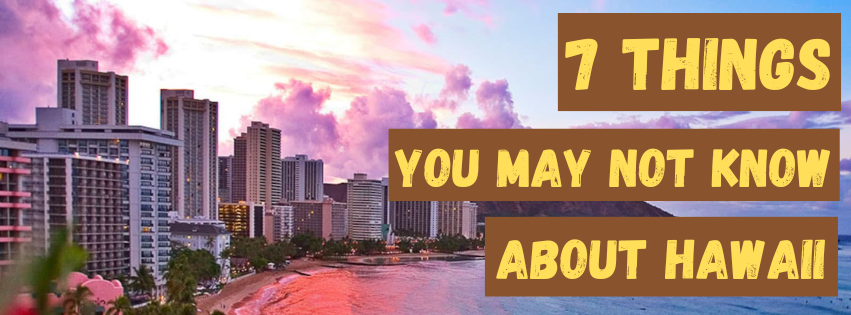
7 Fascinating Things About Hawaiian Culture You May Not Know
Hawaii is famous for its beaches, volcanoes, waterfalls and beautiful landscapes, but there is another side of the islands that visitors don't always get to see.
Hawaiian culture is filled with traditions, language, customs and systems that developed over generations. Some of these traditions are well known, while others can be easy to miss unless someone takes the time to look beyond the typical tourist experience.
From a surprisingly small alphabet to a traditional greeting based on sharing breath, several parts of Hawaiian culture reveal just how distinctive the islands' history really is.
Here are some fascinating things that may not be common knowledge.
Things You May Have Not Known About Hawaiian Culture

The Hawaiian Alphabet Has Just 12 Letters
One of the most recognizable features of the Hawaiian language is its remarkably small alphabet.
The traditional Hawaiian alphabet contains 12 letters: five vowels and seven consonants.
The vowels are A, E, I, O and U. The consonants are H, K, L, M, N, P and W.
The ʻokina, which looks like a small backwards apostrophe, is also an important part of written Hawaiian. It represents a glottal stop and can change the pronunciation and meaning of a word.
The kahakō, or macron placed above a vowel, is another important feature. It indicates that the vowel should be held longer.
That means the language may use relatively few letters, but pronunciation is extremely important.
For visitors, learning even a few Hawaiian words can provide a greater appreciation for the culture and history behind the names of places throughout the islands.

Hawaiian Literacy Once Reached Remarkable Levels
The Hawaiian language was traditionally passed from generation to generation through an oral tradition.
That changed dramatically during the 19th century.
After Western missionaries arrived, Hawaiian was adapted into a written form using a relatively small collection of letters that represented the sounds of the language.
Hawaiian leaders and educators embraced literacy, and the written language spread rapidly.
By the middle of the 19th century, literacy among Native Hawaiians had reached extraordinarily high levels, with some historical estimates placing it around 90% to 95%.
For a society transitioning from an overwhelmingly oral tradition to widespread written communication in a relatively short period, that was a remarkable development.
Newspapers, books and other written materials began appearing in Hawaiian, creating an extensive written record of Hawaiian perspectives, stories and events.
The development of literacy therefore became much more than a way to communicate. It helped preserve Hawaiian language and knowledge in written form.
Honi Ihu Is More Than a Greeting
Many people have seen images of traditional Hawaiian greetings involving two people touching noses.
The practice is called honi ihu.
While it might look unusual to someone unfamiliar with the tradition, the gesture has a deeper meaning.
The greeting involves the sharing of hā, or breath.
In Hawaiian thought, breath can represent the essence or life force of a person. Sharing breath therefore carries a meaning that goes far beyond simply saying hello.
The gesture represents connection between people.
That makes honi ihu a good example of how Hawaiian traditions can contain layers of meaning that aren't immediately obvious to visitors.
It's not simply about touching noses. It is connected to the idea of sharing life and recognizing another person's presence.

The Traditional Lūʻau Wasn't Exactly What Tourists Think
The word lūʻau is now commonly associated with Hawaiian feasts featuring music, dancing, food and entertainment.
But there is an interesting linguistic detail behind the term. Traditionally, a large Hawaiian gathering or feast could be called a pāʻina or ʻahaʻaina. The word lūʻau itself refers more specifically to young taro leaves used in food preparation.
Over time, the word became associated with the broader feast experience that is familiar today. That means the modern use of the word doesn't perfectly match its original meaning.
It is another example of how language evolves as traditions change and become understood in different ways.
Hawaiian Royalty Used Feathers Instead of Precious Metals
Gold and silver may be associated with royalty in many cultures, but Hawaii developed a very different visual language for status and power.
The Hawaiian Islands did not have abundant natural deposits of precious metals such as gold or silver. Instead, skilled Hawaiian artisans created extraordinary works using feathers from native birds.
Royal garments known as ʻahu ʻula, or feather capes, could contain thousands of individual feathers. These elaborate pieces were associated with high-ranking chiefs and members of the Hawaiian royal class.
Featherwork wasn't simply decorative. The colors, craftsmanship and rarity of the materials could communicate social status and political importance.
Creating these objects also required tremendous skill and patience.
Today, Hawaiian featherwork is recognized as an important artistic and cultural tradition, and surviving examples provide a glimpse into the sophistication of pre-contact Hawaiian craftsmanship.

Ahupuaʻa Connected the Mountains to the Sea
Perhaps one of the most interesting aspects of traditional Hawaiian society was the way land and resources were organized. Hawaiian land divisions called ahupuaʻa generally extended from the mountains toward the ocean.
Rather than treating different environments as completely separate areas, the system connected resources from the uplands all the way to the shoreline.
A single ahupuaʻa could include forests, streams, agricultural areas, residential land and coastal fishing grounds.
This arrangement allowed communities to access a variety of resources within the same general land division. It also reflected a broader understanding that resources were interconnected.
Water originating in the mountains could eventually reach agricultural areas and the ocean. Activities taking place upstream could therefore affect people living farther down the ahupuaʻa.
Managing the land required an awareness of those relationships.

Hawaiian Culture Was Built Around Community
Another important part of understanding Hawaiian culture is recognizing the importance of community and relationships.
Traditional Hawaiian society developed sophisticated systems for sharing resources, passing knowledge between generations and maintaining relationships between people and the natural environment.
Many cultural practices were connected to ideas of responsibility and connection rather than simply individual ownership.
That perspective can help explain why concepts involving land, family, food, ancestry and nature continue to play such important roles in Hawaiian culture today.
Hawaii isn't simply a collection of islands with beautiful scenery.
It is a place with a deep cultural history that existed long before modern tourism transformed the islands into one of the world's most recognizable vacation destinations.
There Is Much More to Hawaii Than the Tourist Experience
The next time someone visits Hawaii, it can be easy to focus on the obvious attractions. The beaches are spectacular. The mountains are unforgettable. The food is incredible. The sunsets can be breathtaking. But the deeper story of Hawaii is found in its people, language, traditions and history.
The 12-letter Hawaiian alphabet demonstrates the uniqueness of the language. The extraordinary rise of Hawaiian literacy reveals how quickly written communication spread throughout the islands. Honi ihu shows how a simple greeting can carry a profound cultural meaning.
Traditional featherwork demonstrates the incredible skill of Hawaiian artisans, while the ahupuaʻa system reveals an understanding of land and resource management that connected mountains, communities and the ocean.
Even the word lūʻau has a story that many visitors never hear. Those details make Hawaii even more interesting.
The islands aren't just a destination to visit. They are home to a living culture with traditions that continue to influence how people understand language, community, land and identity.
For anyone who wants to experience Hawaii beyond the usual tourist attractions, learning about that culture can make a trip feel entirely different.
Sometimes the most memorable part of visiting the islands isn't something that can be photographed. It's learning the story behind the place.
While we have you, feel free to check out what we have in store right here on Aloha Sun! We have only the best, fruitiest Hawaiian-inspired flavors when it comes to disposable vapes!