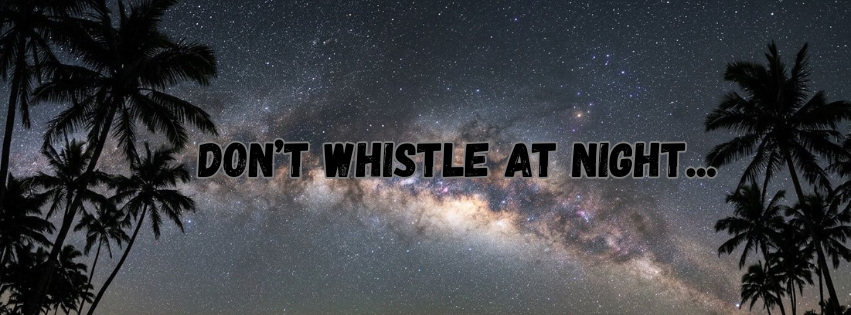
Why You Shouldn't Whistle At Night In Hawaii...
Hawaii is filled with breathtaking beaches, lush rainforests, and towering volcanic landscapes, but beneath its natural beauty lies a rich tradition of myths and legends that have been passed down for generations. Many of these stories remain an important part of Hawaiian culture, blending history, spirituality, and respect for the islands into unforgettable tales.
One of the most fascinating—and perhaps unsettling—is the belief that you should never whistle at night.
To many visitors, it might sound like nothing more than an old superstition. However, for many people in Hawaii, this tradition is treated with genuine respect because of its connection to one of the islands' most famous legends: the Night Marchers.
So why is whistling after dark considered such a bad idea? The answer takes us deep into Hawaiian folklore.
The Legend of the Night Marchers
The story begins with the Huakaʻi Pō, better known in English as the Night Marchers. We've previously spoken about them before.
According to Hawaiian tradition, the Night Marchers are the spirits of ancient Hawaiian warriors who continue to march across the islands long after death. They are believed to follow the same trails, valleys, beaches, and mountain paths they walked centuries ago while serving high-ranking chiefs and royalty.
These ghostly processions are said to occur after sunset, often moving silently through the darkness except for the sounds that announce their arrival.
Many stories describe hearing rhythmic footsteps, distant chanting, beating drums, or the haunting call of a conch shell before the spirits appear.
For those who believe the legend, these sounds are a warning to stay out of their way.

Why Whistling Is Considered Dangerous
Among the many traditions connected to the Night Marchers is the belief that whistling at night can attract unwanted attention.
In Hawaiian folklore, whistling is thought to call out into the darkness, potentially drawing the spirits toward whoever made the sound.
Rather than simply making noise, the whistle is believed to invite supernatural visitors or disrupt forces that should be left alone after sunset.
Because of this, many locals avoid whistling outdoors once night falls.
Whether someone believes the legend literally or simply respects Hawaiian traditions, the custom remains surprisingly common throughout the islands.
Signs the Night Marchers Are Near
The Night Marchers are rarely described as appearing without warning. Instead, Hawaiian legends say there are several signs that may signal their approach.
The most commonly reported include the distant sound of conch shells echoing through the night, rhythmic beating of traditional drums, chanting carried on the wind, or the unmistakable sound of synchronized footsteps moving through the darkness.
Some stories even describe mysterious torchlights winding through forests or along ancient trails.
Whether these experiences have natural explanations or not, they have become deeply woven into Hawaiian storytelling for generations.
What You're Supposed to Do
According to Hawaiian tradition, there are specific ways to respond if you believe the Night Marchers are approaching.
The most important rule is simple: never stand in their path.
If possible, locals traditionally advise going indoors immediately and remaining there until the sounds have passed.
If shelter isn't available, folklore recommends lying flat on the ground with your face downward.
This gesture is believed to show humility and respect while avoiding direct eye contact with the marching spirits.
Many versions of the legend warn that looking directly at the Night Marchers could bring severe misfortune or worse.
Whether viewed as literal truth or cultural tradition, these practices reflect the deep respect many Hawaiians have for their ancestors and sacred stories.
Ancient Trails Still Matter Today
One reason the Night Marcher legend continues to resonate is because many of the routes they are believed to travel still exist today.
Ancient Hawaiian footpaths crossed valleys, coastlines, lava fields, and mountain passes long before modern roads were built.
Some people believe the spirits continue to use these historic pathways, particularly in areas that remain relatively untouched.
Certain locations throughout the islands have developed reputations as places where unusual sightings or mysterious nighttime experiences have been reported.
While there is no scientific evidence supporting these claims, the stories remain an important part of local folklore.

More Than Just a Ghost Story
Although outsiders sometimes view the Night Marchers as simply another ghost legend, the story carries deeper cultural meaning.
The warriors are often viewed as protectors of sacred places and symbols of Hawaii's history.
The traditions surrounding them encourage respect—for ancestors, for cultural sites, and for the land itself.
Even people who do not believe in spirits often choose to honor these customs out of respect for Hawaiian culture rather than fear.
In that sense, the legend serves as both a supernatural tale and a reminder of the islands' rich heritage.
Why the Story Endures
Stories about the Night Marchers have been shared for centuries, and they continue to fascinate both residents and visitors today.
Some claim to have heard unexplained drums deep in the night.
Others tell stories of mysterious lights moving through forests or along isolated beaches.
Whether these accounts are supernatural encounters, misunderstandings, or simply part of Hawaii's powerful oral tradition, they have helped keep the legend alive across generations.
The warning against whistling at night remains one of the simplest ways these stories continue to influence everyday life.
Should You Whistle at Night in Hawaii?
Ultimately, whether someone believes in the Night Marchers is a personal decision.
There is no evidence that whistling after dark will summon ancient warriors or bring bad luck. At the same time, the tradition represents an important piece of Hawaiian folklore that many people continue to respect.
For visitors, honoring customs like this is one way to appreciate the islands beyond their scenic beauty.
After all, Hawaii is more than just tropical beaches and volcanic landscapes. It is a place rich with history, storytelling, and traditions that continue to shape its unique identity.
So if someone reminds you not to whistle after sunset while visiting Hawaii, it may be worth listening. Even if it's simply out of respect for one of the islands' most enduring legends, keeping the whistle to yourself might just be part of experiencing the true spirit of Hawaii.