The Unique Wildlife of Hawaii
The wildlife of Hawaii is unlike anywhere else on Earth, and that comes down to one major factor: isolation. Sitting thousands of miles from the nearest continent, the islands developed ecosystems that evolved completely on their own.
Over millions of years, plants and animals adapted to specific environments without outside interference, creating species that exist nowhere else.
This level of endemism makes Hawaii one of the most biologically unique places on the planet—but also one of the most fragile.
Native Animals Found Nowhere Else
Some of Hawaii’s most iconic animals are found only within the island chain. The Nēnē, for example, is the state bird and evolved from the Canada goose to survive in volcanic landscapes. Instead of relying on wetlands, it adapted to lava fields and rugged terrain.

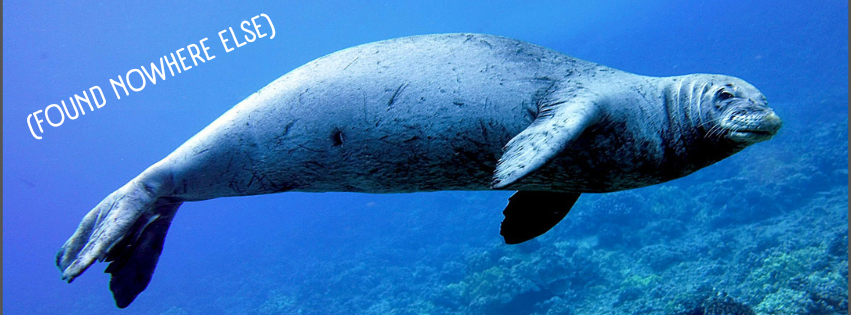
Another remarkable species is the Hawaiian monk seal, one of the rarest seals in the world. These animals spend their lives around the Hawaiian Islands and face constant threats from habitat loss and human activity.

Birdlife in Hawaii is especially diverse, particularly among the honeycreepers. Species like the ʻIʻiwi and ʻApapane showcase a wide range of beak shapes and feeding styles, each evolved to match specific food sources. The Kiwikiu is another example, though it is critically endangered and rarely seen.

Even more unique is the Hawaiian hoary bat, the only land mammal native to the islands. Unlike other species that arrived with human activity, this bat made the journey naturally, making it a rare exception in Hawaii’s ecosystem.

Rare and Remarkable Plant Life

Hawaii’s plant life is just as extraordinary. The Cyanea shipmanii is one of the rarest plants in the world, found only on the slopes of Mauna Kea and Mauna Loa. Its limited range makes it extremely vulnerable to environmental changes.
Another standout is the Silversword, also known as ʻahinahina. This plant grows in high-altitude volcanic environments and has a striking appearance, with silvery leaves that reflect sunlight and help it survive harsh conditions.
These plants are not just beautiful—they are highly specialized, often depending on very specific conditions that can be easily disrupted.

A Fragile Ecosystem Under Threat
Despite its beauty and uniqueness, Hawaii’s ecosystem faces serious challenges. One of the biggest threats comes from mosquitoes, which were introduced to the islands by humans. These insects carry diseases like avian malaria, which has devastated native bird populations.
As temperatures rise due to climate change, mosquitoes are moving into higher elevations—areas that once served as safe havens for native birds. This shift has put species like the ʻIʻiwi and Kiwikiu at even greater risk.
Invasive species also pose a major problem. Non-native animals and plants often outcompete native species for resources, disrupting ecosystems that evolved without such competition. What might seem like a minor introduction can have long-term consequences in such an isolated environment.
Conservation Efforts and Innovation
Efforts to protect Hawaii’s wildlife are ongoing and increasingly urgent. Scientists and conservationists are working to preserve habitats, restore native ecosystems, and develop new methods to control invasive species.
One promising approach is the Incompatible Insect Technique, which aims to reduce mosquito populations by interfering with their ability to reproduce. This kind of innovation could play a crucial role in protecting native birds from disease.
Conservation groups are also working to protect and reintroduce endangered plants, ensuring that species like Cyanea shipmanii don’t disappear entirely.
Unique Habitats Like Hosmer Grove
Certain areas highlight both the challenges and resilience of Hawaii’s ecosystems. Hosmer Grove on Maui is one such location. It’s a unique forest where native birds coexist within a landscape that includes non-native trees.
While not a perfect ecosystem, it provides a rare opportunity for endangered species to survive and be observed. Birds like the Maui ʻAlauahio and ʻIʻiwi can still be found here, offering a glimpse of what Hawaii’s forests once looked like.
A Natural Treasure Worth Protecting
Hawaii’s wildlife is more than just unique—it’s irreplaceable. Every species tells a story of adaptation, survival, and evolution in one of the most isolated environments on Earth.
But that same isolation makes these ecosystems incredibly vulnerable. Without continued conservation efforts, many of these species could be lost forever.
Protecting Hawaii’s wildlife isn’t just about preserving beauty—it’s about safeguarding a living, breathing example of how life can evolve in extraordinary ways when given the chance.