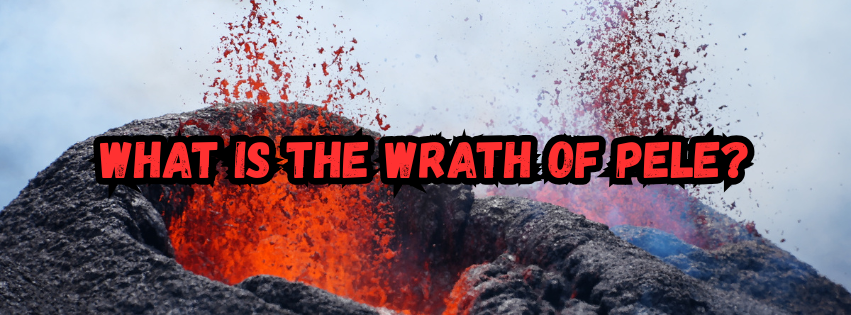
Pele’s Wrath: Volcano Goddess, Hawaiian Legend, and the Curse of the Lava Rock
In Hawaiian mythology, Pele is one of the most powerful and deeply respected deities. She is the goddess of volcanoes, fire, lightning, and wind—forces that shape and reshape the islands themselves. Her presence is tied directly to the creation of land in Hawaiʻi, but also to its destruction.
When people speak about “Pele’s wrath,” they are often referring to two connected ideas: the raw volcanic power associated with her mythology, and a modern folklore belief known as Pele’s Curse, which warns against removing natural materials from the islands.
Together, these stories blend cultural tradition, natural history, and spiritual belief into one of Hawaiʻi’s most enduring legends.
Pele, the Volcano Goddess of Creation and Destruction
At the heart of Hawaiian tradition, Pele is not simply a destructive force—she is also a creator.
Her mythology describes her as a goddess who travels across the islands, shaping the landscape through volcanic fire. When lava flows into the ocean, it cools and hardens, forming new land. In this way, Pele is believed to be constantly rebuilding Hawaiʻi even as she destroys parts of it.
Stories passed down through generations often describe her emotional and unpredictable nature, mirroring the behavior of active volcanoes themselves. Her movements are said to reflect both anger and transformation, symbolizing the dual power of fire to destroy and renew.

The Legend of “Pele’s Curse”
One of the most well-known modern interpretations of Pele’s influence is the belief commonly called Pele’s Curse.
According to this folklore, lava rocks, black sand, and volcanic stones are considered sacred because they are thought to be part of Pele’s body or her “children.” Removing them from the islands is viewed as disrespectful or even forbidden.
The belief holds that taking these materials may bring misfortune, bad luck, or unexplained difficulties until the items are returned.
Because of this, a surprising number of visitors who take lava rocks home later mail them back to Hawaiʻi, often accompanied by apologetic letters describing a streak of bad luck and hoping to lift the supposed curse.
Even the U.S. Postal Service in Hawaiʻi and Hawaiʻi Volcanoes National Park have reportedly received many of these returned packages over the years, reflecting how widespread the belief has become among travelers.
Whether viewed as spiritual consequence or cultural warning, the story of Pele’s Curse continues to influence visitor behavior across the islands.

Volcanic Power as Pele’s Physical Manifestation
Beyond modern folklore, Pele’s wrath is also tied to the very real volcanic activity that has shaped Hawaiʻi for millions of years.
The Hawaiian Islands were formed through a hotspot volcanic system, where magma rises through the Earth’s crust, creating new land over time. In mythology, this geological process is seen as the physical expression of Pele’s presence.
Her legendary conflicts, especially with her sister Namakaokahai, the sea goddess, symbolize the constant struggle between fire and water. These battles represent the natural process where lava meets the ocean, cools, and forms new land while also being destroyed by waves and erosion.
This cycle of creation and destruction is central to understanding both the science and mythology of the islands.
Historic Eruptions Attributed to Pele’s Fury
Throughout Hawaiian history, major volcanic events have often been interpreted through the lens of Pele’s emotions and movements.
One notable example includes the 1859 Mauna Loa eruption, which produced extensive lava flows over an extended period and dramatically reshaped parts of the island.
Kīlauea, one of the most active volcanoes in the world, has also experienced long-term eruptive phases that locals have historically associated with Pele’s ongoing presence.
These events are remembered not only as geological milestones but also as spiritual reminders of the goddess’s power and unpredictability.
The Footprints of 1790: A Lasting Physical Reminder
One of the most haunting historical connections between myth and geology comes from the 1790 Kīlauea eruption.
During this event, a group of Hawaiian warriors was caught in a sudden explosive volcanic surge filled with ash and toxic gases. The eruption left behind preserved footprints that remain visible in hardened volcanic ash.
These footprints serve as both a scientific record of a catastrophic event and a cultural reminder of Pele’s overwhelming power when she is believed to be angered.

A Myth That Still Shapes Behavior Today
Even in modern times, the legend of Pele continues to influence how people interact with Hawaiʻi’s natural environment.
The idea of respecting volcanic materials is deeply tied to cultural sensitivity, environmental awareness, and spiritual belief. Whether visitors interpret Pele’s Curse literally or symbolically, many choose to leave natural materials untouched as a sign of respect for the land and its traditions.
In this way, the story of Pele is not just mythology—it remains an active part of how Hawaiʻi is experienced and understood.
The Main Takeaway From Pele’s Wrath
Pele represents more than just a goddess of fire and volcanoes. She embodies the living, shifting nature of the Hawaiian Islands themselves.
Her “wrath” exists in two forms: the spiritual caution expressed through modern folklore, and the undeniable geological force of volcanic activity that continues to shape the islands today.
Together, these perspectives create a powerful narrative where myth and nature meet—reminding both residents and visitors that Hawaiʻi is a place built on both destruction and creation, guided by forces far older than modern history.