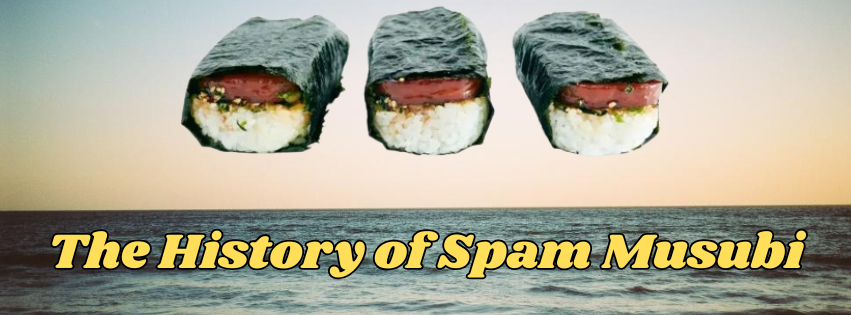
More Than Just a Snack in Hawaii: The History of Spam Musubi
Did you know one of Hawaii’s most iconic foods was originally born out of survival and necessity?
Spam Musubi may look simple at first glance — grilled Spam layered over rice and wrapped in seaweed — but behind that convenience-store favorite is a story tied deeply to war, immigration, culture, and Hawaii’s unique identity.
Today, Spam Musubi is everywhere across the islands. It shows up in school lunches, beach coolers, gas stations, local markets, and especially at Hawaii’s famous 7-Elevens. For many locals, it is comfort food. For visitors, it quickly becomes an obsession after the first bite.
But Spam Musubi is much more than a trendy snack. It represents the way Hawaii blends cultures together into something entirely its own.
The Origins of Spam in Hawaii
To understand Spam Musubi, it helps to understand why Spam became so important in Hawaii in the first place.
Spam was introduced to the islands during World War II when the U.S. military needed inexpensive, shelf-stable protein that could survive long shipping routes across the Pacific. Fresh meat was harder to transport and rationing made many traditional foods difficult to access.
Spam solved that problem.
The canned pork product became widely distributed among soldiers stationed throughout Hawaii, but local residents also began relying on it heavily during wartime shortages. It was affordable, filling, easy to store, and could be prepared quickly.
Over time, Spam stopped being viewed as simply military food and became integrated into everyday island cooking.
That connection never faded.
Even today, Hawaii consumes more Spam per capita than anywhere else in the United States, with millions of cans eaten every year.

Japanese Influence Helped Create Spam Musubi
Spam Musubi would not exist without Hawaii’s large Japanese community and the cultural traditions they brought to the islands.
Japanese immigrants introduced foods like rice balls, or onigiri, which were portable, convenient meals wrapped in seaweed. Traditionally, onigiri contained ingredients like salted salmon, pickled plum, or tuna.
But in Hawaii, local families adapted those traditions using ingredients that were affordable and readily available.
Spam became the perfect substitute.
Instead of stuffing rice balls with fish or vegetables, slices of grilled Spam were placed on top of compact rice blocks and wrapped together with nori seaweed. The result was something familiar yet entirely new.
This fusion of American canned meat and Japanese rice culture eventually evolved into the modern Spam Musubi known today.
Who Invented Spam Musubi?
Like many iconic foods, the exact origin of Spam Musubi is difficult to pin down.
Versions of Spam and rice combinations likely existed throughout Hawaii as early as the 1940s and 1950s. Japanese-American families, plantation workers, and local communities all experimented with inexpensive ways to create filling meals.
However, many people credit Barbara Funamura, a Japanese-American woman from Kauai, with helping popularize the rectangular version of Spam Musubi during the 1980s.
Her version closely resembles what people recognize today: a neat block of rice topped with glazed Spam and secured with a strip of seaweed.
Regardless of who officially created it first, Spam Musubi became deeply tied to Hawaiian food culture over time.
Why Spam Musubi Became So Popular
Part of Spam Musubi’s success comes from how practical it is.
It is portable, inexpensive, filling, and easy to eat almost anywhere. Whether someone is heading to the beach, going hiking, packing lunch for school, or grabbing breakfast before work, Spam Musubi fits perfectly into island life.
That convenience helped earn it a reputation as Hawaii’s unofficial energy bar.
Unlike many grab-and-go snacks, Spam Musubi is also surprisingly satisfying. The salty richness of Spam pairs perfectly with warm rice and crisp seaweed, creating a balance of textures and flavors that somehow works better than expected.
For many visitors, it becomes one of the most memorable foods they try in Hawaii.
The Evolution of Spam Musubi
While the original version remains the most popular, Spam Musubi has evolved into many different variations over the years.
One of the most common styles features teriyaki Spam glazed in a sweet soy-based sauce that caramelizes while cooking. This adds a smoky sweetness that balances the saltiness of the meat.
Other versions include:
- Furikake seasoning sprinkled over the rice
- Egg layers added between the Spam and rice
- Spicy mayo or sriracha
- Kimchi-inspired variations
- Bacon and avocado combinations
Despite the modern twists, the heart of Spam Musubi remains the same: simple ingredients transformed into something comforting and uniquely Hawaiian.

Spam Musubi Became a Symbol of Hawaii
What started as a wartime adaptation eventually became one of the most recognizable foods in Hawaii.
It reflects the islands themselves — a blend of cultures, traditions, and resilience shaped by history.
Spam Musubi also represents how local communities turned limited resources into something meaningful and delicious. Rather than rejecting Spam because of its military origins, Hawaii embraced it and made it part of island identity.
Today, the snack is so beloved that August 8 is officially recognized as National Spam Musubi Day.
That level of popularity says everything.
More Than Just Convenience Store Food
Visitors often discover Spam Musubi casually while stopping at a convenience store or local market. But after learning the history behind it, the snack takes on an entirely different meaning.
It is not just rice and canned meat wrapped in seaweed.
It is a story about immigration, wartime survival, cultural blending, and Hawaii’s ability to create something entirely unique from unexpected ingredients.
And honestly? It also just tastes really good.